Today’s MarTech Top Voice: CEO of Unbounce Steve Oriola.
For the MarTech Top Voice series, we are delighted to have such an esteemed guest as Steve, CEO of Unbounce Go-to-Market Solutions. This company, which is the parent company of Unbounce’s landing page and conversion rate optimization (CRO) platform, Insightly CRM, and LeadsRx marketing attribution, has gathered solutions that make it possible for SMBs to successfully scale their sales, marketing, and customer success.
In 2023, under Steve’s leadership, Unbounce went through the acquisition process of Insightly CRM, uniting the two companies under a single vision to deliver seamless go-to-market tools.
Besides his time at Unbounce, Steve has over 20 years of leadership experience in B2B SaaS, where he has held various positions at Act!, Constant Contact, Pipedrive, and Julius. He has been focusing on helping businesses through the simplification of their processes and the scaling of their growth. He stepped in at Unbounce because he liked the company’s mission to empower the SMBs with simple, scalable solutions that allow teams to capture, convert, and cultivate customers without friction.
Conversion rate optimization is one of the main focuses of Steve’s work. He is always pointing out that it is a low-cost and time-efficient way for SMBs to get more customers. Unbounce, under his direction, has introduced features like Smart Traffic and Dynamic Text Replacement to simplify marketing personalization, which, in turn, allows small marketing teams to show a quantifiable increase in their work while making the best use of the paid media budget.
MarTech Insights (MTI): Please share a bit about your role at Unbounce and the career journey that led you to this position.
Steve: I’m the CEO of Unbounce Go-to-Market Solutions, the parent company of Unbounce’s landing page and conversion rate optimization (CRO) platform, Insightly CRM, and LeadsRx marketing attribution. All three products are designed to help SMBs scale sales, marketing, and customer success. In 2023, I led Unbounce through the acquisition of Insightly CRM, effectively bringing the two companies together.
I’ve spent more than two decades leading B2B SaaS companies, including Act!, Constant Contact, Pipedrive, and Julius. I joined Unbounce because of its vision to give SMBs simple, scalable solutions so teams can capture, convert, and cultivate customers without being slowed down by complex processes.
MTI: Conversion rate optimization has become a critical focus area for marketers worldwide. From your perspective, what excites you most about the current state of CRO and its role in shaping modern marketing strategies?
Steve: CRO needs a rebrand. Too often, SMBs think it’s too complex or out of reach, when in fact it’s one of the most efficient ways to scale results. CRO is about small, focused changes that compound into serious conversion growth.
Take Going, the online travel company. A simple three-word CTA change tested on an Unbounce landing page drove triple-digit conversion growth and changed the way they spend on paid media. It shows the power of the right tools—tools that remove bottlenecks and empower teams to test and learn quickly.

MTI: Unbounce’s recent State of A/B Testing Report revealed a surprising CRO paradox — while 56% of SMB marketers cite CRO as a top priority, only 32% are actually running landing page tests. What do you think is driving this disconnect?
Steve: Marketers face constant change and endless “shoulds,” which can breed resistance to new tools and processes. The reality is, 52% of B2B PPC ads still drive to homepages instead of landing pages. It’s been clear for a long time that this is not a best practice on paid media, but teams continue to resist the change. If teams aren’t yet using landing pages, they aren’t testing them.
Google is forcing the shift with its new ad quality prediction model, which penalizes ads that lead to destination pages that lack clear, relevant answers and next steps. If you’re still sending traffic to your homepage, you’re creating a poor user experience by making visitors dig for answers. Every time a searcher bounces back to search to get what they need, campaign performance is even more likely to suffer.
Another driver is simplicity. It’s easier to test subject lines in email than to set up a landing page test. Anyone can draft one, and the tools to deploy it require minimal technical knowledge. Without tools that make CRO seamless, many teams default to what feels manageable, even if it’s less impactful.
Recommended MarTech Insights: MarTech Top Voice Interview with Terry Flaherty, VP, Principal Analyst at Forrester
MTI: The report also highlights that 51% of marketers face resource constraints as their biggest barrier to A/B testing. How can marketing leaders overcome these challenges when dealing with limited budgets, time, and tools?
Steve: CRO’s reputation for complexity is part of the problem. Many marketers find that testing tools require developer support, creating bottlenecks. Some avoid dedicated tools altogether. The State of A/B Testing Report shows that over half of marketers rely on web analytics and manual testing, limiting their ability to scale CRO testing.
Unbounce was built to eliminate those barriers for SMBs and empower everyone on the team to build pages and run tests all within a single platform. When everyone can participate, testing becomes faster, easier, and far more impactful.

MTI: More than half of B2B ads are still sending traffic to generic homepages rather than optimized landing pages. Why do you see this as a missed opportunity, and what can marketers do to shift this long-standing practice?
Steve: If you’re investing in paid media, your homepage is the worst place to send traffic. With so many paths to choose from, attribution becomes more challenging, making it difficult to optimize ad spend toward a specific conversion goal.
Using your homepage also forces every visitor through the same generic experience. Dedicated landing pages let you personalize the message, test variations, and directly measure ROI, turning paid media into a growth engine.
MTI: How do you see AI and automation reshaping the way marketers approach A/B testing and CRO, especially for SMBs that are operating with lean teams and tighter budgets?
Steve: Search giants like Google are demanding more relevant, personalized experiences. The more friction searchers encounter in Google, the more likely they are to default to AI-powered search tools that deliver direct answers. To stay competitive, Google has to push advertisers toward better paid search campaigns, and that starts with landing pages.
AI traffic optimization makes personalization at scale possible. Unbounce’s Smart Traffic automatically routes visitors to the landing page most likely to convert based on attributes like location, device, and more. If you layer on Dynamic Text Replacement, you can also match headlines to search terms in real time. For lean teams, this means automation does the heavy lifting so marketers can deliver more personalized campaigns without extra effort.

MTI: Rising ad costs and increasing compliance pressures are impacting marketers globally. What strategies would you recommend for keeping optimization efforts cost-effective and sustainable in such an environment?
Steve: Landing page optimization is the best way to stretch ad budgets. If you haven’t tested pages before, the initial gains can be dramatic. Beyond ad creative, you can experiment with endless landing page elements, including headlines, copy, design, forms, CTAs, and more. More levers to pull means more ways to drive sustainable ROI.
Recommended MarTech Insights: MarTech Top Voice Interview with Zaire Williams, Founder at XCLSV
MTI: Many marketers express frustration with cumbersome, complex testing tools. How is Unbounce innovating to make CRO simpler, faster, and more accessible for today’s marketing teams?
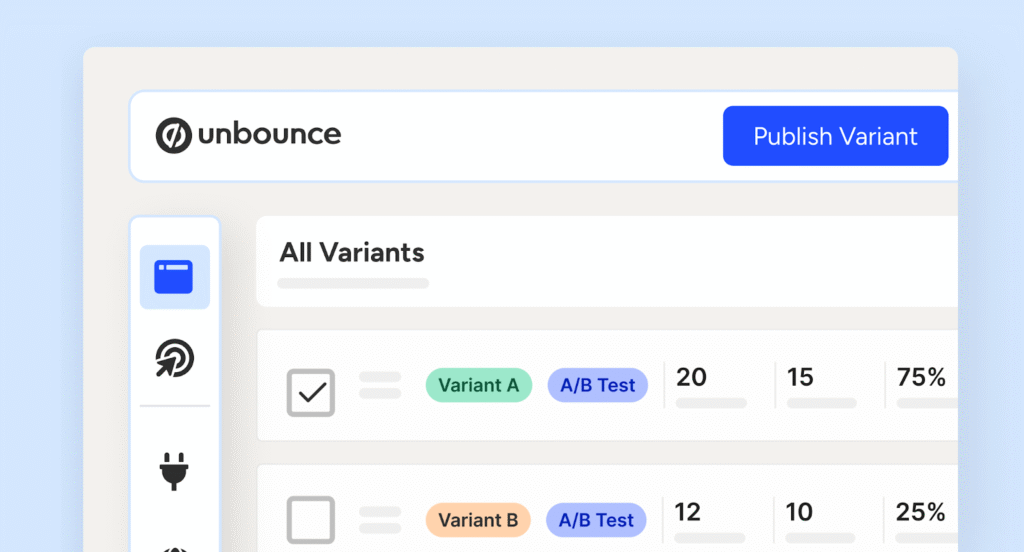
Steve: Unbounce prioritizes ease of use with every product and feature. For A/B testing, we’ve focused on the pain points that stop SMBs from testing: overly technical tools that require developer support, the challenge of identifying winning variants, and the frustration of needing one tool to build pages and another to run tests. We’ve eliminated those barriers so teams can do it all in a single platform. Testing doesn’t have to be complex to be effective.
MTI: Looking three years ahead, how do you see the CRO landscape evolving in terms of technology, marketing culture, and experimentation practices?
Steve: Looking three years ahead, CRO will be shaped by stronger sales and marketing alignment, both in the tools we use and in the way teams work. Many of our agency customers are already emphasizing the need to optimize for sales connect rate as well as conversion rate, making sure campaign strategy doesn’t stop at the form fill. That means better thank-you pages, clearer messaging on offers and next steps, and tighter integration with CRMs and automation tools to ensure prompt, personalized follow-up. Experimentation sits at the crux of this shift because simply generating the lead is no longer enough—the handoff to sales needs to be seamless.
At the same time, first-party CRM data will play a much larger role in CRO strategies. Feeding that data back into ad platforms like Google AI Max will allow marketers to optimize for lead quality, not just volume.
MTI: Are there particular industries or companies you see as leaders in successfully adopting CRO practices to drive measurable growth and ROI?
Steve: Digital marketing and paid media agencies stand out. Many of our customers in this space are at the forefront of a constantly evolving paid media and CRO landscape. They recognize that strategy is where they add the most value, so they need to adapt quickly as ad platforms and best practices shift. That’s why they value simple, consolidated tools. By avoiding unnecessary complexity, they can scale client results without burning billable hours.
MTI: For CMOs and marketing leaders aiming to build a culture of experimentation, what practical steps and mindset shifts would you advise to create long-term success?
Steve: Building a culture of experimentation starts with removing the barriers that keep teams from testing—limited time, complexity, or simply not knowing where to begin. Instead of launching large tests with too many variables, focus on small, isolated changes so you can clearly see what drives impact. There’s no such thing as a failed test; even inconclusive results point you toward what’s worth testing next.
The right tools are also essential. If testing feels complicated or disruptive, teams won’t prioritize it. The right tools streamline the process by bringing page building, testing, and analysis into one platform so you can create a seamless workflow.
But creating a culture isn’t enough—you also need to reinforce it. That means celebrating the act of testing itself, not just the outcomes. Make experimentation easy and consistent by dedicating a budget, integrating it into campaign planning, and treating it as a proactive part of the workflow. For example, when launching new content, test ad variants around key themes. You may discover one drives higher engagement while another delivers stronger conversions, giving you insights to refine distribution.
MTI: Finally, what key leadership lessons have you learned while guiding Unbounce through innovation and growth in a rapidly changing martech ecosystem?
There have been many, but here are my top three:
- AI represents a pivotal shift for leaders. It represents a gain in efficiency by freeing our team members from drudgery and allowing them to do the work that brings fulfillment and growth. I feel strongly that it’s my job as CEO to lead by example and to embrace AI in my own personal work to set the stage for the team.
- Focus on how you can solve additional problems for the same customer. At Unbounce, we take that a step further by ensuring our tools are connected across the entire GTM function.
- When developing new products and features, keep in mind that year-long engineering projects almost always fail. Keep them tight, delivering something every 90 days, and be ruthless about scope.
MTI: Who is a leader in the industry you would like to recommend for the “MarTech Top Voice Interview Series”:
Steve: Rather than supply a name, I would suggest topics around AI adoption. So few of us as leaders are experts in AI at this time; a series of leaders who are at differing levels of AI adoption within their organizations would be of interest to me. It would be great to hear from those just starting and those leading the way.
Recommended MarTech Insights: MarTech Top Voice Interview with Anna Tompkins, Global Head of Marketing – Pet & Group Projects- Rhodes Pet Group
About Steve: Steve, the CEO of Unbounce Go-to-Market Solutions, is an excellent leader with over 20 years of experience in the management of B2B SaaS companies. His knowledge spans across areas such as conversion rate optimization, go-to-market strategy, product integration, and enabling SMBs with user-friendly tools for sales, marketing, and customer success operations.
About Unbounce: Unbounce is the top platform that allows the creation of landing pages, A/B-testing, and conversion rate optimization, among other things, all aimed at helping SMBs grow sustainably. Apart from Insightly CRM and LeadsRx marketing attribution, Unbounce offers seamless instruments that facilitate the customer acquisition process, enable the teams to efficiently test and repeat their work, a nd get the most out of their paid media campaigns in terms of ROI. Unbounce, an easy-to-use platform with automation features that attract the attention of clients and hence result in real growth numbers, is the go-to solution for CRO and marketing optimization worldwide.
For media inquiries, you can write to our MarTech Newsroom at sudipto@intentamplify.com