Today’s MarTech Top Voice: Anzu, EVP Marketing and Strategy, Natalia Vasilyeva.
Advances in AI, data interoperability, and real-time rendering are transforming gaming environments into dynamic, addressable media ecosystems, where audience engagement, targeting, and measurement operate with the same precision as programmatic advertising. Today, data and design work in harmony to deliver contextual, brand-safe, and measurable in-game experiences.
At the center of this transformation is a strategic vision powered by technology — one that redefines how brands reach consumers inside virtual worlds. Anzu.io.
From AI-driven targeting and cross-platform interoperability to privacy-safe audience segmentation across 180+ countries, Anzu’s innovations are pushing the boundaries of what modern marketing infrastructure can achieve.
In this MarTech Top Voice Interview, we speak with Natalia Vasilyeva, EVP of Marketing & Strategy at Anzu, about how in-game advertising is evolving from a niche experiment into a mainstream media channel — one that’s predictive, data-enriched, and aligned with the privacy-first era of digital engagement.
Opening & leadership context
MarTech Insights (MTI): Hi Natalia, welcome to the MarTech Insights Top Voice Interview Series! To begin, please share a bit about your role at Anzu and the career journey that led you to this position.
Natalia: Thank you — I’m excited to be part of this series!
I started my career at Sport.com, the global leader in mobile yoga and fitness apps at the time. It was there that I got my first real exposure to the mobile marketing space. From there, I moved to Glispa, which broadened my view into the wider AdTech ecosystem. Programmatic advertising was just starting to take off, and I was lucky to be part of that early shift toward more transparent, data-driven, and multichannel strategies.
 My real acceleration came when I joined Anzu shortly after the company was founded back in 2017. Operating at the intersection of gaming and advertising — two incredibly fast-moving industries — meant I had to wear many hats early on. That gave me a deep, hands-on understanding of marketing, tech, and sales.
Today, as EVP of Marketing & Strategy at Anzu, I focus on driving our mission: making advertising in games better. That means helping brands and developers understand the opportunities in-game advertising offers — and unlock its full potential.
MTI: You’ve had a dynamic path through mobile, AdTech and now in-game advertising — how has your earlier experience shaped your mindset as you lead marketing & strategy at Anzu.io?
Natalia: My background in mobile and AdTech gave me a strong foundation. These are more mature, structured ecosystems, and that experience helped shape how I think about building strategy in a more nascent space, like in-game.
It taught me how to identify product-market fit, how to navigate emerging formats, and how to anticipate the challenges that can come with scaling up something innovative.
MTI: At Anzu.io, you’re positioning gaming as “part of the media mix” rather than a niche. When you look at your leadership role, what cultural or organizational mindshifts were most critical to enable that?
Natalia: The gaming and advertising industries are both multi-billion dollar markets. Yet, there’s still surprisingly little overlap between them. That gap represents a massive opportunity for innovation and collaboration — and it’s one of the key reasons Anzu came into existence.
In many ways, this mindset shift happened internally first. Our vision is to establish in-game advertising as a mainstream ad category, and that’s how we preach gaming to our customers and the wider industry.
Recommended MarTech Insights: MarTech Top Voice Interview with Dmitri Lisitski, CEO & Co-founder Influ2
MTI: As EVP of Marketing & Strategy, how do you balance the push for cutting-edge innovation (formats, tech, data) with the need to educate advertisers and agencies that in-game truly is “just like other media” in terms of rigor?
Natalia: The need to educate is constant — that part never goes away. But it’s the cutting-edge tech and innovation that grabs advertisers’ attention. Opportunities to reach more diverse audiences, in more creative and meaningful ways — new environments, new ad formats, smarter data — these are the things that spark curiosity.
Once we’ve got that, we focus on grounding the conversation: showing how in-game fits into familiar frameworks and delivers measurable value. It’s a balance between excitement and reassurance — and you need both to drive real adoption.

MTI: From your MarTech vantage point, what are the biggest misconceptions about in-game advertising (from marketers, agencies or publishers) and how are you working to correct them?
Natalia: There’s been a near-complete paradigm shift in how gaming audiences are understood and engaged since Anzu was founded.
Gamers were once stereotyped as “geeks in their basements,” and in-game ads were dismissed as clunky pop-ups. For marketers, the relevance wasn’t clear, and there were no real standards to measure effectiveness.
 That’s why we’ve put a huge emphasis on education. Our recent US Gaming Audience Report helped debunk some of the biggest myths. It showed that nearly half of all US gamers are women, most are highly educated, and gaming today is a social, family-oriented activity enjoyed across generations. It’s a far cry from the outdated “young, single, male” image.
At the same time, progress on standards has been critical. The IAB and MRC’s intrinsic in-game advertising guidelines have given advertisers more confidence, while our integrations with third-party vendors have helped bring reliable measurement to the channel. It’s not just about brand awareness — in-game ads can drive impact throughout the funnel. In fact, our research shows an average 8-point lift in purchase intent from intrinsic ad formats.
This isn’t just about reach — it’s about real, measurable consumer action.
MTI: Given your role, how do you pitch to agencies or brand CMOs who still view gaming as “kid stuff” or “niche”? What messages or proof-points do you emphasize?
Natalia: The thing is, everyone is a gamer today — from parents and grandparents playing mobile games to Gen Z in Fortnite or Roblox. It’s mass culture now.
For agencies and CMOs, I focus on three things: audience, measurement, and complementarity. First, gaming reaches people who are increasingly hard to reach elsewhere. Our research with SuperAwesome shows Gen Z and Gen Alpha already spend more time gaming than on social media. This is where they’re forming habits, communities, and brand loyalties.
Second, measurement. In-game is a scalable and measurable channel. We’ve invested heavily in our tech and third-party vendor integrations to give marketers verified measurement, as well as transparency, accountability, and brand safety.
And finally, this isn’t about replacing your media mix — it’s about enhancing it. Gaming gives brands a new way to show up in an environment that’s immersive, brand-safe, and incredibly impactful.
Recent announcements & strategic moves
MTI: In September 2025, Anzu announced the global launch of “privacy-safe audience targeting” across 62,400 segments in 180+ countries. From your vantage, what were the most significant operational or strategic hurdles you had to overcome to reach that milestone?
Natalia: Without a doubt, it was the technical complexity of the task.
Gaming is a separate, cross-platform ecosystem, and each is governed by a totally different set of rules and data flows. Each platform comes with its own privacy regulations, identifiers, and standards. So building a privacy-safe targeting solution that works across all of them wasn’t just a product challenge, but a strategic one.
MTI: You are among the foremost players to launch a media-sustainability solution for in-game advertising — enabling measurement and compensation of carbon emissions. How much is sustainability now becoming a competitive differentiator in the gaming-ad space, and how are you communicating that to clients and agencies?
Natalia: For me, as a marketer and as an individual, sustainability is very important. But when you zoom out to the industry level, it’s still more of a “nice to have” than a true driver of decisions.
Some markets, like the UK and parts of Europe, are leaning in, others are lagging behind, but I do think it will become more top of mind in the coming years, especially as we find a more straightforward way to calculate and lower emissions. That’s the turning point: when sustainability becomes less abstract and more actionable.
Recommended MarTech Insights: MarTech Top Voice Interview with Jonathan Moran, Head of Martech Solutions Marketing at SAS
MTI: The challenge with addressability in intrinsic in-game advertising continues to be a disruptor in the market. How do you see the “identity / addressability” challenge evolving in gaming specifically versus other media channels?
Natalia: Gaming is a fragmented ecosystem across mobile, PC, and console, making it difficult to track users and activate audiences consistently. This challenge has grown with the loss of traditional identifiers, stricter privacy regulations like GDPR and CCPA, the end of third-party cookies, and Apple’s new data limits. Consoles present a particularly difficult environment, lacking the robust tracking capabilities found on other platforms.
Modern identity solutions address these gaps. Universal IDs offer stable, privacy-safe identifiers that work across platforms, devices, and games, solving gaming’s core addressability challenge. Our integration with partners like ID5 enables persistent, compliant IDs that empower advertisers with precise targeting, better measurement, and more advanced campaigns. For publishers and developers, a strong identity layer boosts inventory value and monetization.
As privacy rules and technology continue to evolve, identity will be the key to unlocking deeper, sustained brand investment in gaming.
Market trends, positioning & future of In-game AdTech
MTI: Gaming reach is massive and still growing — how do you see the gap between “advertisers who understand gaming” vs “advertisers who treat gaming like any other channel”? What’s holding the laggards back?
Natalia: I’d rather say that there’s definitely a gap between advertisers who understand gaming and those who don’t see it as a media channel at all. And often, what holds the latter group back isn’t lack of data — it’s mindset.
We can show them the reach, the engagement, and the audience overlap. We can prove that their consumers are playing games. But sometimes the resistance isn’t professional, it’s personal. If someone hasn’t played a game since the first consoles, it’s hard for them to imagine gaming as a serious marketing environment.
That bias can quietly shape decisions, and that’s why education matters so much.
MTI: The phrase “intrinsic in-game advertising” emphasizes ads that are embedded into the gameplay experience rather than being disruptive. How do you define the line between embedded and intrusive, and how do you maintain that standard as you scale?
Natalia: The line between embedded and intrusive comes down to one thing: player experience.
 As an in-game advertising provider, collaboration with developers is core to what we do. We believe ads should enrich the gameplay — not interrupt it. That’s why we work closely with studios to ensure branded content fits naturally within the game’s environment, narrative, and design. When done right, advertising becomes part of the world — not something layered on top of it.
The most successful implementations are those where ads feel like a natural extension of the game, enhancing immersion rather than breaking it.
But ultimately, it’s the players (aka the end users) who call the shots. If they want more interactivity, like clickable ads — we’re ready for that too. It’s about building tech that satisfies what players, developers and advertisers actually want.
MTI: Looking ahead 3-5 years: Where do you believe in-game advertising will sit in the media mix? Will it become “just media” (like TV/OOH/digital) or will it remain a distinct specialized channel? What needs to happen for the former scenario?
Natalia: I see in-game advertising becoming a standard part of the media mix alongside TV, OOH, and digital. But getting there will require a few key shifts.
First, we need continued progress on measurement, addressability, and standardization. Without those foundations, gaming won’t be seen as a truly accountable channel. Education and adoption also remain critical — we need to keep proving to marketers that their audience is already here, and that in-game delivers measurable impact.
At the same time, the format itself will evolve. We’ll move toward more immersive, interactive experiences, and AI will also accelerate hyper-personalization at scale.
Ultimately, in-game won’t be seen as niche or novelty, but as a media channel that is highly effective, deeply engaging, and impossible to ignore.
MTI: Finally, what are you personally most excited about in the next 12-18 months at Anzu.io — from a marketing & strategy lens — and what should the broader MarTech community watch for?
Natalia: What excites me most is the continued convergence of the gaming and advertising worlds. We’re getting closer to a tipping point — where gaming is no longer treated as a side bet, but as a core media channel.
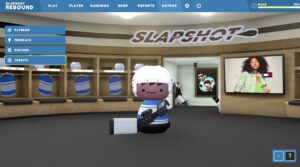 From a marketing and strategy perspective, the focus now is on alignment: helping both sides — brand marketers and game developers — speak the same language. That’s what will unlock scale. Once we have that common ground, everything else follows: better planning, more seamless integration, and faster adoption.
The MarTech community should watch closely because gaming isn’t just growing, it’s maturing. And the next 1-2 years could be the moment it fully clicks into the mainstream media mix.
MTI: Tag a leader in the industry you would like to recommend for the “MarTech Top Voice Interview Series”.
Natalia: Marisa Nelson, EVP Marketing & Communications at Equativ
Thank you, Natalia, for sharing your valuable insights with MarTech Insights. We look forward to featuring your perspective and continuing this important conversation on the future of the in-game adtech ecosystem..
Recommended MarTech Insights: MarTech Top Voice Interview with John A. Steinert, Chief Marketing Officer at Informa TechTarget
For media inquiries, you can write to our MarTech Newsroom at info@intentamplify.com
About Natalia
Natalia Vasilyeva, EVP Marketing and Strategy at Anzu.io, the world’s most advanced in-game advertising platform. She leads the global marketing team, which stretches across New York, London, and Tel Aviv. Vasilyeva was employee number six at the company and continues to shape Anzu’s strategy, proposition, and roadmap, having helped transition the company from Start-Up to Scale-Up to its current status as the in-game advertising leader.
As an influencer and industry expert in her own right, Natalia has also played an essential role in establishing and standardizing in-game advertising as a media channel over the past five years and has developed strong relationships with experts from many of the globe’s leading brands, game companies, and industry bodies. She joined the 2023 judging panel for the Digiday Awards Europe and The Drum Awards Metaverse category. Natalia was finalist for Advertising Week Europe’s Future is Female Awards and received the IAB Service of Excellence Award in 2024.
Before Anzu, Natalia worked as a project and marketing manager for a global AdTech company, Glispa, and the world leader of mobile fitness apps, Sport.com. A multilingual speaker and author, she writes extensively about AdTech and in-game advertising and frequently speaks at industry events around the world, educating audiences on the potential of gaming as an advertising medium.
About Anzu
Anzu is the most advanced in-game ad solution for mobile, PC, and console. Anzu’s in-game ads put players first and help advertisers reach audiences programmatically in a non-disruptive and highly engaging way. A patented 3D ad tracking engine, the first to bring viewability measurement in-game, and partnerships with trusted AdTech vendors make Anzu the preferred in-game advertising partner.
Backed by WPP, Sony Innovation Fund, NBCUniversal, Samsung Next, Bandai Namco Entertainment 021 Fund, PayPal Ventures, Amex Ventures, and many other prominent investors, Anzu is on a mission to make advertising in games better. Learn more: https://www.anzu.io