Brands are in a hurry with the customers of the digital world of today to quickly catch their attention with their so-called micro-content, i.e., small, impactful, and memorable snippets. This new-age content is neither a marketing trend nor a secret recipe but a “strategic tool” which is capable of instantly delivering value to the audiences and, in effect, engaging as well as converting them. According to Gartner, 70% of digital consumers expect content to be relevant and easily consumable.
What Is Micro-Content?
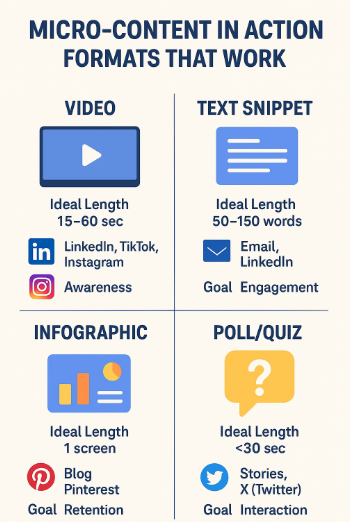
Micro-content is pieces of content that are short and to the point, created with the sole purpose of being consumed very quickly. Examples of such content are posts on social media, email snippets, short videos, and infographics or interactive polls. They can be thought of as the appetizers that lead audiences to the main course.
According to research by HubSpot, as much as 54% of consumers prefer content that is short and easy to understand, which, in turn, points to the enormous power of concise messaging. This kind of content succeeds in catching up with people’s informational habits, which are typically quick, primarily visual, and mostly done on mobile devices.
Why Micro-Content Captures Attention
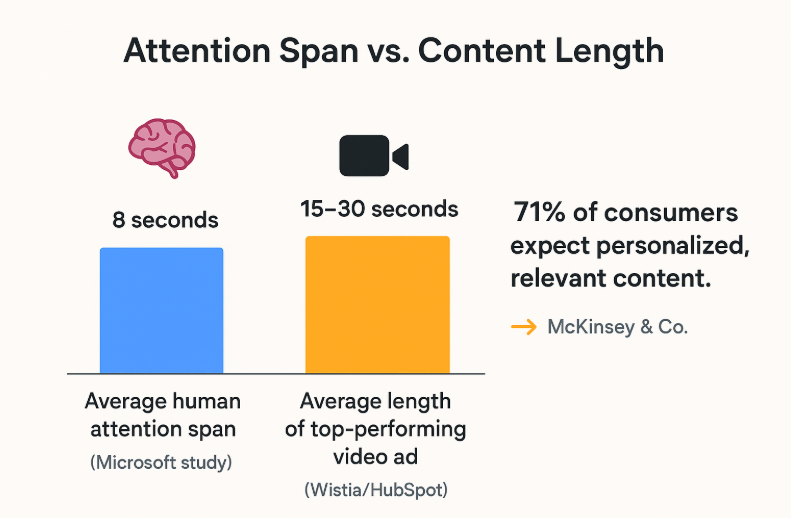
Micro-content conforms to the psychology of human attention and memory as well. Short, well-organized content is generally easier to digest and recall, allowing the user to feel accomplished immediately. When content evokes emotions – such as humor, inspiration, or surprise – people remember it longer than if it is explained at length.
71% of consumers expect companies to deliver personalized interactions, and 76 % got frustrated when it didn’t happen.
Take as an exam,ple, a 15-second video explaining a new feature of a software. The video is likely to attract more people than a 10-page white paper. Quick insights, bite-sized tutorials, or animated graphics can pique the interest of the audience and, hence, incite the desire to know more.
Crafting Micro-Content That Converts
For micro-content to be able to convert clicks into loyal customers, it must combine clarity, engagement, and strategic intent:
Clear Messaging: Emphasize only one idea in each snippet. Overloading content weakens its impact.
Visual Appeal: Use graphics, GIFs, or animations to grab viewers’ attention instantly.
Interactive Features: The use of Polls, quizzes, or swipe features can increase the rate of engagement and the number of people taking part.
Consistent Brand Voice: Even the shortest content should reflect your brand’s personality and tone.
Actionable CTA: It is a must that the audience, through every micro-content piece, is led to the next step – demo, download, or subscription.
Think of a B2B SaaS business that produces a 20-second animation illustrating a new feature with a clear “Book a Demo” button. That single piece of micro-content can ignite engagement, generate leads, and build long-term customer loyalty.
Leveraging Marketing Technology
Marketing technology (MarTech) can be the reason why micro-content is not only scalable but is also effective:
Automation Platforms: The likes of HubSpot or Salesforce Marketing Cloud are channel scheduling tools that allow the maintenance of brand consistency while posting.
AI-Powered Personalization: AI analyzes user behavior to serve highly relevant snippets tailored to audience interests. Research shows that personalization most often drives a 10 to 15% revenue lift (with company‑specific lift spanning 5% to 25%). The productivity of marketing alone due to generative AI could increase between 5% and 15% of total marketing spend, worth about $463 billion.
Analytics and Optimization: With real-time metrics, marketers adjust content to align with the latest trends, maximizing user interaction and making every micro-interaction count.
By utilizing psychology, creativity, and technology together, companies can turn the transient nature of attention into a more valuable rapport.
Conclusion
Micro-content is no longer an option but a must. It catches the attention of the user, quickly transfers the value, and generates leads. Companies that leverage micro-content with MarTech can transform fleeting clicks into long-term customer loyalty.
FAQs
1. What length is best for micro-content?
Videos typically run 15–60 seconds, text snippets contain 50–150 words, and infographics fit a single screen.
2. In what way does micro-content prompt engagement?
It offers immediate worth, is suitable for mobile devices, is easily shareable, and is often emotionally relatable.
3. Are micro-content strategies applicable to B2B companies?
Yes, undoubtedly. Short demos, explainer videos, and industry tips can significantly enhance B2B marketing.
4. What MarTech tools are there for making micro-content?
The best MarTech tools for micro-content creation are HubSpot, Salesforce Marketing Cloud, Adobe Experience Manager, and AI personalization platforms.
5. How do companies evaluate the effectiveness of their micro-content?
Indicators of success include the number of people clicking on links, sharing through social media, time spent on content, and generation of leads from each snippet.
Discover the trends shaping tomorrow’s marketing – join the leaders at MarTech Insights today.
For media inquiries, you can write to our MarTech Newsroom at info@intentamplify.com.