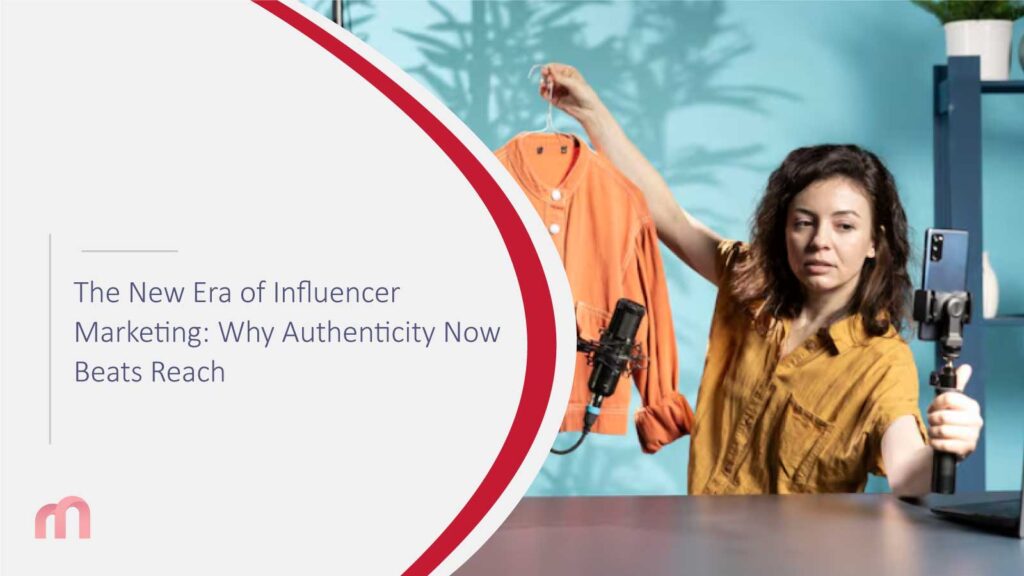
Influencer marketing is on its way to a different stage, which is less about the number of followers and more about the real voices. Present-day audiences deeply connect to those content creators who appear genuine, relatable, and simply human. What they need from creators is the kind of talk that they are used to hearing among friends, not some staged conversation of a brand. Largest platforms are also showing this transformation, where the winners are usually the simplest yet most authentic posts, not the highly produced ads.
One such trend can be seen in recent industry reports that include forecasts of massive budget switching to creator-led content due to higher trust and engagement. Meta’s report of the same category also stresses how attention and activity are being driven by content that looks like a natural share from users rather than a polished ad. These developments are drawing a single line between them: authenticity matters more than reach these days. According to Gartner, 90% of enterprises now consider authentic creator content a top driver of digital trust in brand communication strategies.
For a brand, this change in the influencer marketing landscape is particularly promising in MarTech or tech-based environments. After all, when the audience sees a creator’s voice, they are way more likely to follow through with their choice. Now that online trust is the core of any brand-consumer interaction, real creators are the ones who can help bridge the gap between businesses and customers and put them in a win-win situation.
This article explores why being real is the leading factor for modern influence, how smaller creators are building a bridge of stronger engagement, and in what ways MarTech facilitates brands to deepen their partnerships with credible creators at scale.
The Shift Toward Authentic Influence in Modern Marketing
One of the most evident changes with influencer marketing is the decline of the emphasis on creators with the largest reach and the rise of those who seem to have real, relatable, and natural voices. The audience is looking for content that is not only truthful but also less rehearsed. This change in focus has spread to a wide variety of platforms where the performing and production level has less influence on the success of the content than ever before. It has transformed the way in which brands organize their influence campaigns, the criteria used for measurement, and the very nature of influence being valued. McKinsey reports that authentic creator content increases consumer engagement by up to 40% compared to traditional brand posts.
Why Authenticity Now Outperforms Massive Reach
Authenticity is more powerful than reach because the latter is more of a quantity and less of a quality. People, especially younger ones, always want and even need clarity, honesty, and real views. They are more likely to buy from influencers who talk in their usual manner and make the audience feel that the experience they share with them is their own. No matter how big a personal account can get, it is absolutely impossible to gain or even maintain the belief that the connection is ‘real’. Deloitte reports that 76% of Gen Z trust creators who show real, unfiltered stories over highly produced content.
Most of the recent industry studies lead to the same conclusion. Recent predictions show the trend of audiences trusting the creators who use a simple and unrefined style of communication. Meta’s engagement insights also suggest that the authenticity of an average person’s story is what attracts more interaction, rather than content with a hefty production budget. Such evidence captures the transition of people’s expectations from content- real human content is demanded.
Authenticity Drives More Meaningful Communication
Another functionality of authenticity is that it enables brands to talk to their customers in a more personal way. It is a fact that a lifestyle integration example of a gadget is the most effective way of telling the utility of the product. I, on top of that, the user declares the preference for the product or mentions a feature, and then describes its value in simple terms, the communication is now totally on the listener’s frequency. This mode of communication seems like the one coming from a friend who happens to use the product and not a radio host reading a scripted endorsement.
One more reason why authenticity wins the game is the emergence of niche communities. A vast number of people subscribe to creators because they consider them experts in a particular domain. Hence, even if the community is rather small, the level of its members’ engagement is very high. The power of the message is much bigger if delivered to truly interested recipients than if it is broadcast to large but indifferent groups.
To sum it up, authenticity is the main driver of interaction, trust, and is more trustworthy as a mode of communication. It is the strongest link between brands and consumers, creating a totally different value from the one given by mere reach.
The Rise of Micro-Influencers and Niche Authority
Micro-influencers today are the key figures of modern influencer marketing strategies. Even though the number of their followers is usually not very high, their influence is almost always much wider. The reasons why people follow them are: for their expert knowledge, for their serve-as-an-example-of-the-viewpoint kind of relationship, and for the fact that the content is something that is close to real life, too. That is the reason why companies in the fields of MarTech, SaaS, and consumer technology are willing to cooperate with these lesser-known creators to get a deeper level of engagement.
Their rise is backed up by industry data. Several studies of different platforms have come to the conclusion that a creator with a focused, niche audience will get much higher engagement rates than a celebrity-type influencer with a vast number of followers.
Why Micro-Influencers Drive Deeper Engagement
Deep-level talks, such as those of micro-influencers, have a lot of space to develop as a result of this partnership. By choosing to talk to smaller groups instead of large numbers, they can seriously explore the subject of care, similar tools, problems, and targets. To name one, a person who explains workflow apps or automation tools is in connection with an audience that not only understands the importance of straightforwardness but at the same time is after it to save time and effort. This is exactly the reason why such focused communication plays a big role in the efficiency of brand strategy in attracting those who have an interest and are ready for the next step.
Another one is the relaxed style that micro creators naturally use for their work, and thus, the product they are talking about seems to be a part of their everyday routine. Most of the time, it can be a few seconds of video, a touch of light humor, or an unscripted thought- all of them helping the viewer to come up with how the product may fit in their life. Accenture found that 70% of consumers feel more connected to brands when they see relatable people using the product. Along with that, brand credibility is supported to a great extent because the content is done authentically.
The new scene in the digital world puts volume as one of the things no longer needed for great influence. Instead, the latter has become a more relevant thing. Micro-influencers are very good at it as they are very precise, warm, and authentic, which makes them the most valuable partners in the era of modern marketing.
The Psychology Behind Digital Trust and Credibility
Almost every online interaction is influenced by digital trust. The users of the internet decide the videos to watch, the places to visit online, and the products to buy just by measuring the trustworthiness of the message. This is the reason why authenticity is playing such a significant role in influencer marketing. It ties to the way the human brain evaluates credibility in rapidly changing digital environments.
While people are scrolling, they do a quick evaluation of what they see. A content producer who uses a conversational tone and delivers the most honest ideas looks dependable. There is no exertion of influence, no pre-planned delivery, and no over-the-top claims. This basicness offers the consumer a feeling of assurance. They feel that they are getting information from a person who has practical experience rather than from a person who is acting for an audience. The emotional relaxation of this sort strengthens the partnership of trust.
What Builds Credibility Online
Similar human behavior patterns are inferred from various recent marketing reports. Audiences react more favorably if the content appears to be more intimate and more down-to-earth. When creators narrate real events or demonstrate the legitimate usage of the product, the audience can put themselves in the same situation. This psychological connection makes the statement more credible. Also, it makes the creator’s advice come as the suggestions of a friend rather than an advertisement.
Consistency is also one of the determinants of digital trust. Creators who keep their tone, style, and point of view unchanged in their content win the trust of the readers. Through time, this reliable presence creates a strong emotional attachment between the creator and their audience. Even minor things, such as talking simply, giving common examples, or performing slight humor, humanize the content and make it easier for consumers to remember it.
In a world full of digital distractions, trust is the means through which the noise is filtered. People give attention to those who are real, expressive, and consistent. It is this natural relationship that makes authenticity the main factor of influence rather than the number of followers.
How Brands Can Build Authentic Influencer Strategies at Scale
Constructing an honest influencer plan does not need many complicated steps. It starts by selecting the most suitable voices, promoting normal communication, and employing technology for the support of a consistent, human-centered narrative. When brands are committed to these principles, achieving authenticity at different levels becomes quite feasible.
The initial stage is the finding of the creators whose morals and personal tone match the brand in a natural way. The decision of whom to choose is not made only based on numbers; variety is evaluated according to the personality of creators and their followers. Brands investigate what a content producer says, what he talks about, and how his audience reacts to get the right person. When the world of the producer is parallel to the product’s, the partnership gets its fresh value from the very beginning.
The next point is the provision of the creators with an environment where they can talk in their unique style. Viewers notice very well when a message is forced upon them. Permitting content producers to give their authentic viewpoints- why they like a feature, how they use the product, what is outstanding in their everyday routine- makes the work more connected with the people. The launch of this liberty enhances reliability and results in more real interaction.
Using MarTech to Strengthen Authentic Creator Partnerships
Enterprise technology is also a useful weapon. Modern MarTech platforms are capable of recording sentiment, locating patterns in audience behavior, and providing brands with knowledge on which creator styles evoke the strongest reactions. Armed with this knowledge, companies can improve their messaging, select the best creators, a nd change their campaign strategies efficiently. Gartner predicts that by 2027, 80% of influencer-brand partnerships will be supported by AI-driven creator matching tools.
One more effective strategy is the creation of mutual long-term partnerships. The work output of both sides becomes more fluent when creators and brands partner together for a longer time. Their audience gets acquainted with the relationship. This familiarity supports trust and deepens the interest in the brand.
True strategies develop through harmony, liberty, and wise employment of data. When companies concentrate on genuine voices and significant interaction, the upshot is stronger influence, easier communication, and more loyal followers.
Conclusion
Authenticity is essentially what influencer marketing is all about nowadays. People want influencers whose voices seem genuine, relatable, and understandable. They only respond to those creators who use their own language and tell stories that are in line with the nature of life.
As brands sharpen their tactics, the spotlight is being moved from large to meaningful influence. If they have the right creators, the right message, and the right MarTech assistance, then authentic storytelling not only becomes more impactful but also easier to scale on every channel. This new era celebrates real communication- because people trust it, interact with it, and keep it in their memory.
FAQs
1. Why is authenticity important in influencer marketing?
Audiences connect more with those creators who speak naturally and share real-life experiences rather than giving scripted promotions.
2. Do micro-influencers create a stronger impact than big influencers?
Definitely, their communities are more focused, involved, and on the same wavelength as far as specific interests are concerned.
3. How can brands choose authentic creators?
By examining the creator’s voice, writing style, the interaction with followers, and how the creator’s fashion of delivering the message is similar to the brand’s way.
4. Can authenticity improve campaign performance?
Yes, regularly. Authenticity in content usually results in better engagement and more trust from the target audience.
5. What role does MarTech play in this shift?
The MarTech tool is of great help to brands in picking the most suitable creators. It also aids in understanding the habits of the target audience and facilitating the most natural and trustworthy storytelling that builds trust.
Discover the trends shaping tomorrow’s marketing – join us at MarTech Insights today.
For media inquiries, you can write to our MarTech Newsroom at info@intentamplify.com.